
LOOKING FOR A CAR ACCIDENT LAWYER TO REPRESENT YOU?
What to Do Immediately After a Car Accident in Texas?
You should contact a car accident lawyer as soon as possible after receiving medical care, especially if you were injured, missed work, face ongoing treatment, or disagree with the insurance company about fault or compensation. Getting advice early can help you protect important evidence and avoid accepting a settlement before you understand the full impact of your injuries.
Legal representation is particularly helpful when another driver denies responsibility, multiple vehicles are involved, the available insurance is insufficient, or an adjuster pressures you to settle. Car accident attorneys can investigate the crash, evaluate your losses, and handle settlement negotiations.
Texas generally gives injured people two years to file a personal injury lawsuit, but exceptions and shorter notice requirements may apply. Do not assume that an open insurance claim protects your filing deadline. You do not need to wait until treatment ends to explore your options. Request a free consultation with a car accident lawyer to discuss whether hiring an attorney makes sense for your situation.
What should I do immediately after a car accident?
After a car accident, your first priorities are safety, medical attention, and documenting what happened. The steps you take can also protect your right to compensation if another driver caused the collision.
- Check for injuries and move to safety. Call 911 if anyone is injured or emergency assistance is needed. Move vehicles out of traffic when safe and appropriate.
- Report the accident. Contact law enforcement when required and obtain the accident report information.
- Document the scene. Photograph vehicle damage, road conditions, traffic signs, and visible injuries. Exchange insurance information and collect witness contact details.
- Seek medical attention. Some injuries, including concussions and soft-tissue injuries, may not become apparent immediately.
- Notify your insurance company. Report the accident promptly but avoid speculating about fault or the extent of your injuries.
- Preserve records. Keep medical bills, repair estimates, photographs, and documentation of missed work.
Before accepting an insurance settlement, consider speaking with an experienced car accident lawyer who can evaluate your claim and explain your legal options.
Essential Steps to Take After a Car Accident
You should consider consulting a car accident lawyer promptly after addressing your immediate medical and safety needs if the crash caused injuries, lost income, disputed fault, or uncertainty about insurance coverage. Legal advice is especially useful before accepting a settlement you do not fully understand or when the accident may have long-term medical or financial consequences. You do not have to wait for an insurance denial, a settlement offer, or the completion of medical treatment before speaking with an attorney.
Not every car accident requires legal representation. A minor collision involving only vehicle damage, no injuries, undisputed responsibility, and a straightforward insurance claim may be manageable without a lawyer. However, when injuries, significant expenses, multiple responsible parties, or insurance disputes are involved, an attorney can help evaluate the claim and explain the available options.
The decision should depend on the circumstances of the accident, not simply the amount of vehicle damage. Understanding when to seek legal advice, when representation may be unnecessary, and which Texas legal deadlines apply can help you make an informed decision.
A collision can leave drivers and passengers shaken, confused, or uncertain about their next steps. Even a relatively minor accident may involve injuries that are not immediately apparent, damage that is difficult to assess, or disagreements about responsibility. Knowing how to respond can help protect your safety, preserve important evidence, and prevent avoidable problems when dealing with insurance companies.
Immediately after a car accident, put safety first: check for injuries, call 911 if anyone needs emergency help, and move out of traffic if you can do so safely. Once immediate dangers are addressed, exchange driver and insurance information, document the scene, get medical attention for injuries or symptoms, and notify your insurer promptly.
In Texas, certain crashes must be reported immediately to law enforcement, including those involving injuries, fatalities, or vehicles that cannot be driven normally and safely.
You do not need to determine fault or negotiate a settlement at the roadside. Focus on getting help, providing accurate information, and preserving evidence without putting yourself or others at risk.
The following steps explain what to do at the accident scene and during the hours and days afterward, including the legal responsibilities that apply to drivers involved in Texas car accidents.
1. Check For Injuries and Move to Safety
After addressing immediate medical and safety needs, consider contacting a lawyer as soon as practical if the accident involves injuries, disputed responsibility, or substantial financial losses.
Your initial priorities should include obtaining appropriate medical care, reporting the accident to law enforcement when required, and notifying your insurance company according to your policy.
There is no universal legal requirement to hire a car accident lawyer within a particular number of days. However, contacting an attorney early can help protect evidence and provide time to evaluate the circumstances before important decisions must be made. Witnesses may become difficult to locate, surveillance or dashcam footage may be overwritten, damaged vehicles may be repaired or discarded, and physical conditions at the accident scene may change.
Early consultation can also help you understand communications from insurance companies, identify documents that should be preserved, and determine whether additional investigation is necessary. You do not need a complete collection of medical records, repair estimates, or other documentation before requesting advice.
The best time to seek legal guidance is generally before an unresolved issue becomes more difficult to address. Waiting until settlement negotiations fail or a filing deadline approaches can limit the time available to investigate the accident and evaluate your options.
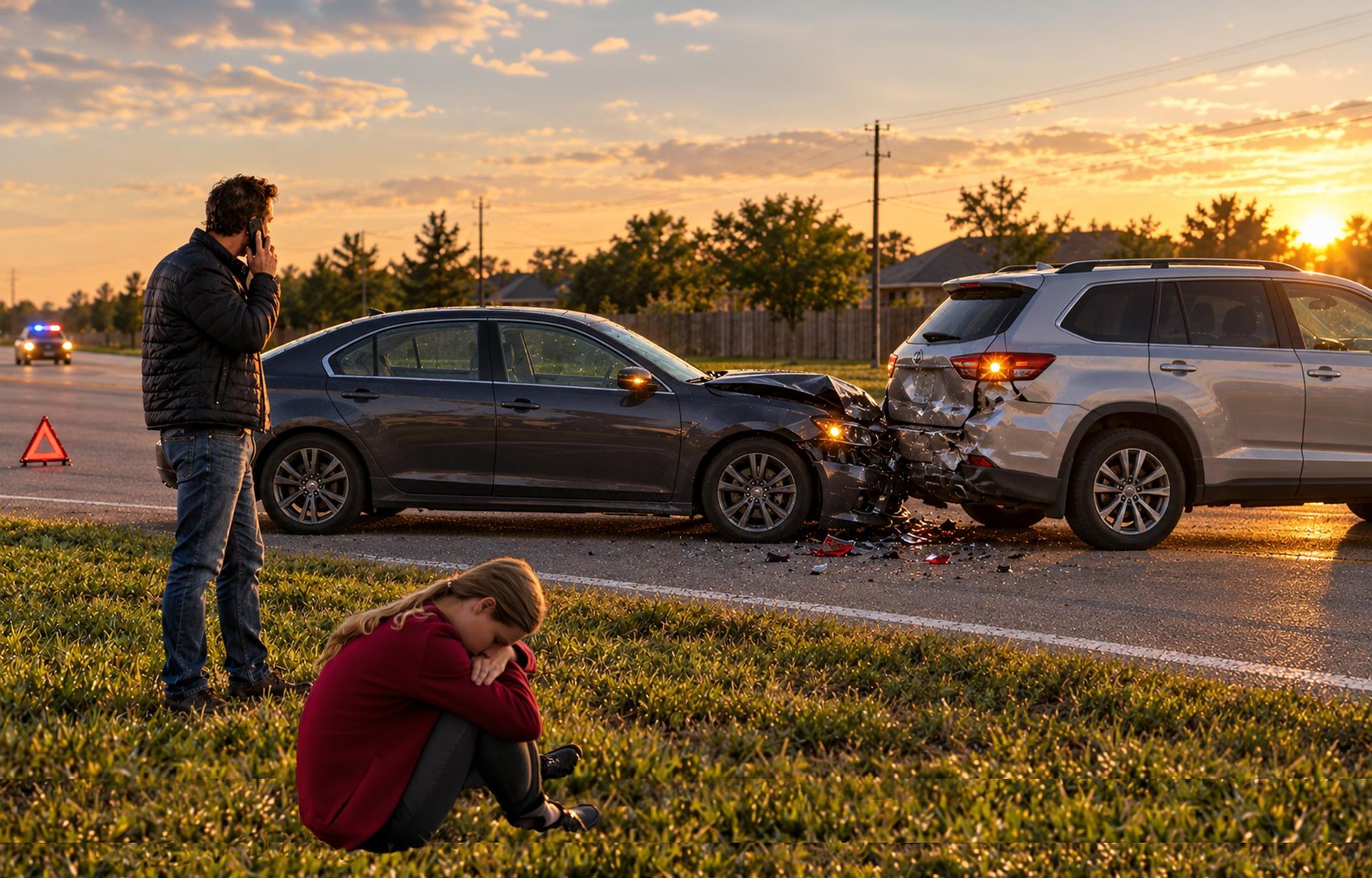
Your first responsibility after a collision is to determine whether anyone needs emergency medical assistance. Check yourself, your passengers, and others involved for injuries. Call 911 if someone is seriously injured, unconscious, trapped, experiencing difficulty breathing, or showing other signs of a medical emergency. Tell the dispatcher where the accident occurred, how many vehicles are involved, and whether anyone requires an ambulance. Follow the dispatcher's instructions, particularly when a person may have suffered a serious head, neck, or spinal injury.
If your vehicle can be driven safely and moving it is appropriate under the circumstances, pull out of active traffic lanes to a nearby shoulder, parking lot, or other suitable location. Turn on your hazard lights and remain alert to approaching vehicles. Do not stand in moving traffic, between damaged vehicles, or in another dangerous location while attempting to assess damage or collect evidence. If the vehicle cannot be operated safely, leave it where it is and seek a protected location when you can do so without increasing the danger.
Moving to a safer location does not mean you can leave the accident scene. Under Texas Transportation Code §§ 550.021–550.023, drivers must fulfill applicable duties to stop, provide required information, and render reasonable assistance to injured people. These responsibilities still apply after vehicles have been moved from the point of impact.
2. Notify Police When Required in Texas
Certain circumstances make early legal consultation particularly important. Consider speaking with an attorney if:
- Your injuries require hospitalization, surgery, rehabilitation, or ongoing medical treatment.
- You cannot work, have lost income, or face uncertainty about your ability to return to your previous employment.
- The other driver denies responsibility or an insurance company claims you contributed to the accident.
- Multiple vehicles, commercial drivers, or employer-owned vehicles were involved.
- The responsible driver has no insurance or insufficient coverage.
- An insurance company denies your claim, disputes your medical treatment, or provides an explanation for payment that you believe is incorrect.
- You receive a settlement offer while your medical condition or future expenses remain uncertain.
- A government vehicle or governmental entity may be involved.
- A family member suffered fatal injuries in the collision.
These circumstances can affect how responsibility is investigated, which insurance policies may apply, what compensation may be available, and which legal deadlines must be observed. They do not automatically mean you need to file a lawsuit. An initial consultation can help determine whether professional representation would be useful.
Under Texas Transportation Code § 550.026, drivers must immediately notify the appropriate law enforcement agency when a collision causes:
- Injury to a person.
- A death.
- Damage that prevents a vehicle from being driven normally and safely.
Call 911 if anyone needs emergency assistance. For a nonemergency collision, contact the appropriate local police department or sheriff’s office for instructions. Texas law specifies which agency to notify based on where the collision occurred.
The Texas Department of Transportation also recommends contacting police if you suspect a driver is intoxicated, a driver has no insurance, or a driver leaves the scene. If the other driver leaves, provide any identifying details you safely observed.
When speaking with officers, describe what you personally saw and experienced. Be truthful, but do not guess about another driver’s speed, intentions, or actions you did not witness. If you do not know an answer, say so.
Ask for the responding officer’s name, agency, and report or incident number, along with instructions for obtaining a copy of the report.
A police report may document the drivers and vehicles involved, roadway conditions, statements, visible damage, and an officer's observations. Although valuable, the report does not automatically determine civil liability. Insurance companies and attorneys may consider photographs, witnesses, video recordings, and other evidence when evaluating responsibility.
If officers do not respond to a minor collision, ask the local agency how to document the incident and whether any additional reporting steps apply.
3. Exchange Driver and Insurance Information
A car accident lawyer may be particularly helpful when a collision causes serious or lasting injuries, including broken bones, traumatic brain injuries, spinal injuries, internal injuries, or conditions requiring extensive medical treatment. These injuries can create financial and personal consequences that are not fully apparent immediately after the accident.
Some injured people require surgery, rehabilitation, physical therapy, or continuing medical care. Others experience chronic pain, reduced mobility, permanent physical limitations, or difficulty returning to their previous employment. Evaluating these claims may require consideration of both existing expenses and reasonably anticipated future losses.
Even injuries that initially seem minor can become more concerning when symptoms persist or worsen. Neck and back injuries, concussions, and certain soft tissue injuries may require additional medical evaluation before their longer-term effects become clear. Seeking appropriate medical care is important for your health, while medical documentation may also help establish the relationship between the collision and your injuries.
Depending on the evidence and applicable law, potentially recoverable losses may include medical expenses, future treatment costs, lost wages, reduced earning capacity, physical pain, mental anguish, physical impairment, disfigurement, and property damage. Not every category applies to every accident, and the amount recoverable depends on the specific facts.
You do not need to complete medical treatment or know the final cost of your injuries before consulting a lawyer. An attorney can help identify the medical, employment, and financial information needed to evaluate the claim as your condition becomes clearer. Uncertainty about future treatment is also a reason to seek advice before agreeing to a final injury settlement.
Once it is safe, exchange information with the other drivers. Useful information to collect includes:
- Full name, address, and telephone number.
- Insurance company and policy number.
- Driver’s license information.
- License plate number.
- Vehicle make, model, and color.
- Vehicle owner’s information if different from the driver’s information.
Texas Transportation Code Section 550.023 requires drivers involved in qualifying collisions to provide their name, address, vehicle registration number, and the name of their motor vehicle liability insurer. Drivers must also show their driver’s license if requested and available, and provide reasonable assistance to injured people.
Photograph insurance cards and license plates if possible. Ask witnesses for their names and contact information.
Witnesses may provide valuable independent information, particularly when the drivers disagree about what happened. Ask witnesses for their names and contact information and briefly record what they observed if they are willing to explain.
Keep conversations focused on necessary information. Avoid arguments about fault and tell the responding officer if another driver refuses to cooperate.
4. Photograph the Scene and Preserve Evidence
Disagreements about who caused a collision are among the strongest reasons to consult a car accident lawyer. Drivers may provide conflicting accounts, witnesses may disagree, or an insurance company may assign you a percentage of responsibility that you believe the evidence does not support.
For example, an intersection collision may involve questions about traffic signals, speeding, distracted driving, or failure to yield. A multi-vehicle accident may require determining how the actions of several drivers contributed to the collision. Investigating these circumstances may involve reviewing crash reports, photographs, witness statements, vehicle damage, available video recordings, roadway conditions, and electronic vehicle data.
Texas generally uses a modified comparative responsibility system for car accident negligence claims. Under Texas Civil Practice and Remedies Code Chapter 33, a person found more than 50% responsible cannot recover damages in claims governed by those rules. When responsibility is 50% or less, damages are generally reduced by that percentage. Fault disputes can therefore affect both eligibility for compensation and the amount recovered.
An attorney can help determine what evidence is available, identify information that may need to be preserved, and assess whether additional investigation is necessary. In complicated cases, an accident reconstruction professional may help explain how the collision occurred.
How Texas Shared-Fault Rules Affect Compensation
Texas generally follows a modified comparative responsibility system for car accident negligence claims. Under Texas Civil Practice and Remedies Code Chapter 33, a person whose percentage of responsibility exceeds 50% generally cannot recover damages in claims governed by those rules. When responsibility is 50% or less, recoverable damages are generally reduced by that percentage.
For example, suppose an injured driver establishes $100,000 in damages but is found 20% responsible for the collision. The responsibility allocation would reduce the recovery to $80,000 before any other applicable adjustments. If the injured driver were found 51% responsible, recovery would generally be barred under the modified comparative responsibility rule.
This means a disagreement about fault can affect more than the insurance company's initial decision. It can directly influence whether compensation is available and how much may ultimately be recovered. Consulting an attorney may be particularly useful when an insurer attributes responsibility to you that you believe is inconsistent with the available evidence.
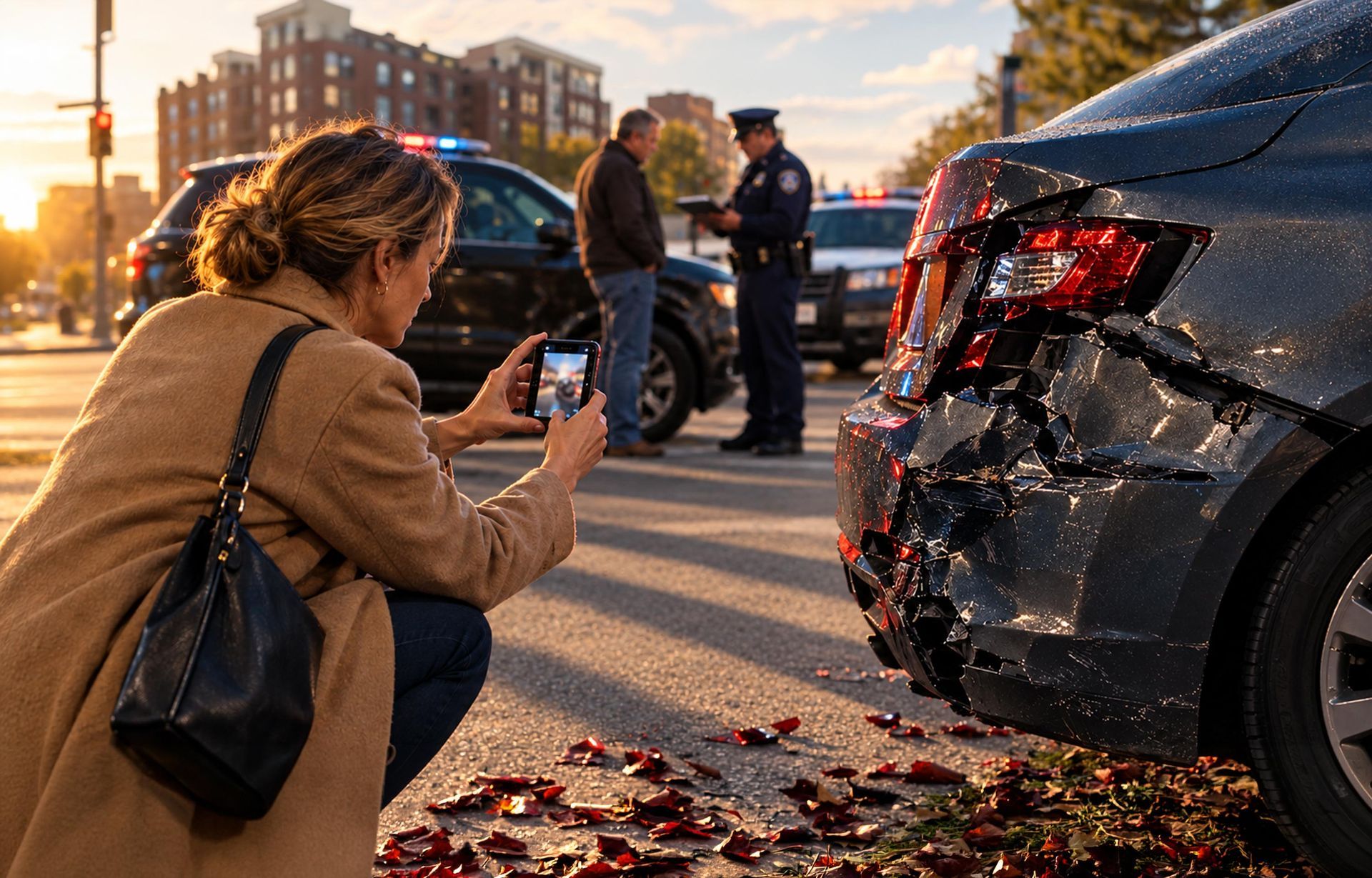
Take photographs only when you can do so without entering traffic or delaying medical care. Useful images include:
- Damage to every vehicle involved and from multiple angles.
- License plates.
- The surrounding roadway or intersection.
- Vehicle positions, if safe to capture before moving.
- Traffic signs, signals, and lane markings.
- Debris, skid marks, and road hazards.
- Weather and visibility conditions.
- Visible injuries.
Capture both close-up details and wider views that show the scene’s layout. Wide photographs showing the entire intersection or accident area can provide context that close-up pictures of damaged vehicles may not capture.
Write down the date, time, exact location, and your recollection of what happened while the details are fresh.
Electronic evidence can be especially important when an accident occurs in a busy commercial area or on a major roadway. Save available dashcam footage. Note nearby businesses, homes, or other locations that may have cameras. Identify these possible footage sources promptly because recordings may be automatically overwritten or deleted.
Evidence collection should never interfere with emergency medical treatment or require entering dangerous traffic. If you need to leave for medical treatment, do not delay care to finish documenting the scene. A passenger or trusted person may be able to collect information safely.
For help organizing supporting records, see our guide to documents needed after a Texas car crash .

Accidents involving several vehicles, commercial trucks, company-owned vehicles, or drivers performing work-related duties may raise liability questions beyond those found in a typical two-car collision. More than one person or business may have contributed to the accident, and determining responsibility may require examining the relationships among drivers, employers, vehicle owners, and other potentially responsible parties.
For example, a commercial vehicle collision might involve questions about the driver's conduct, an employer's responsibilities, vehicle maintenance, or other circumstances contributing to the crash. These cases may also involve multiple insurance policies, separate legal representatives, and evidence that is not readily available to an injured person.
Coverage questions can also arise when the responsible driver is uninsured or does not have enough insurance to cover the losses. Depending on the policies and circumstances, personal injury protection (PIP), medical payments coverage, uninsured/underinsured motorist coverage, or other applicable insurance may provide benefits.
The Texas Department of Insurance explains that these types of coverage serve different purposes and are subject to applicable policy terms. An attorney can help distinguish between a fault dispute, which concerns who caused the collision, and a coverage dispute, which concerns whether an insurance policy provides benefits. These questions may require different evidence and different responses.
5. Seek Medical Attention After The Accident
Your health comes first.
Not every car accident injury produces immediate symptoms. Adrenaline, emotional stress, and the circumstances of a collision can make it difficult to recognize pain or other physical problems at the scene. Neck and back injuries, concussions, muscle strains, and certain other conditions may become more noticeable over the following hours or days. Do not assume that a lack of immediate pain means you are uninjured.
Seek emergency medical attention for severe headaches, confusion, weakness, difficulty breathing, chest pain, or other potentially serious symptoms.
Tell your healthcare provider:
- That you were involved in a car accident.
- How the collision happened.
- What symptoms you are experiencing, and which areas of your body are affected.
- When your symptoms began.
Follow the recommended treatment plan, attend necessary appointments, and report any new or worsening symptoms. Keep copies of medical records, diagnostic test results, discharge instructions, prescriptions, and related bills.
Medical documentation serves two important purposes. It helps healthcare professionals evaluate and treat accident-related conditions, and it may establish the timing and nature of injuries if an insurance company later disputes whether they resulted from the collision. Delaying appropriate care can make recovery more difficult and may complicate questions concerning the relationship between the accident and your medical condition.
Learn more about delayed symptoms after an accident .
6. Notify Your Insurance Company Promptly
Consider obtaining legal advice before accepting an injury settlement if you are uncertain about what the offer covers, whether additional treatment may be necessary, or what legal rights you would give up by signing a release.
An early settlement offer is not automatically unfair. The important question is whether the proposed amount and release terms are appropriate for the circumstances. An offer may appear attractive when medical bills are accumulating or you are missing work, but the expenses already incurred may not represent the full financial consequences of the accident.
Before accepting a settlement, consider whether you understand your injuries and expected treatment, whether future medical expenses are likely, whether missed work or reduced earning capacity has been considered, and whether the insurer disputes any part of the claim. You should also understand which claims and parties would be covered by the proposed release.
A final injury settlement commonly requires signing a release that limits further claims against the released parties for the same accident. If additional medical needs arise later, you may be unable to seek more compensation from those parties.
An attorney can review the proposed settlement, explain the release terms, and identify unresolved questions. Seeking legal advice does not require rejecting the offer or filing a lawsuit. It means understanding the consequences before making a potentially final decision.
Contact your automobile insurance company as soon as reasonably possible after the collision.
When speaking with your insurance company, be prepared to provide the following information:
- Date and location of the accident: When and where the collision occurred.
- Vehicles involved: Information about the vehicles and drivers involved in the crash.
- Injuries and property damage: Any known injuries or vehicle damage resulting from the accident.
- Claim number: Request a claim number for future reference.
- Insurance adjuster: Record the adjuster's name, telephone number, and contact information.
- Required documentation: Ask which photographs, reports, estimates, or other documents the insurance company needs to process your claim.
Your policy may provide collision coverage, personal injury protection (PIP), medical payments coverage (MedPay), or uninsured/underinsured motorist benefits, depending on the coverage purchased and the circumstances of the accident.
Start a file containing:
- Crash photographs and witness information.
- The police report number and report when available.
- Medical records, bills, and treatment instructions.
- Repair estimates and towing or rental receipts.
- Insurance letters, emails, and claim forms.
- Notes from calls with insurers.
- Documentation of missed work and lost income.
Keep the file updated as treatment and insurance communications continue. You do not need to know the full extent of your injuries or expenses before reporting the accident.
For background on policy language, read Car Insurance Terms Explained.
It is important to distinguish between your own insurance company and the insurer representing another driver. Your insurer's obligations arise from your policy, while another driver's insurer investigates its insured's potential liability and applicable coverage. The reporting and cooperation requirements may differ, particularly concerning recorded statements and requests for medical information.
7. Protect Your Rights When Dealing with Insurance Adjusters
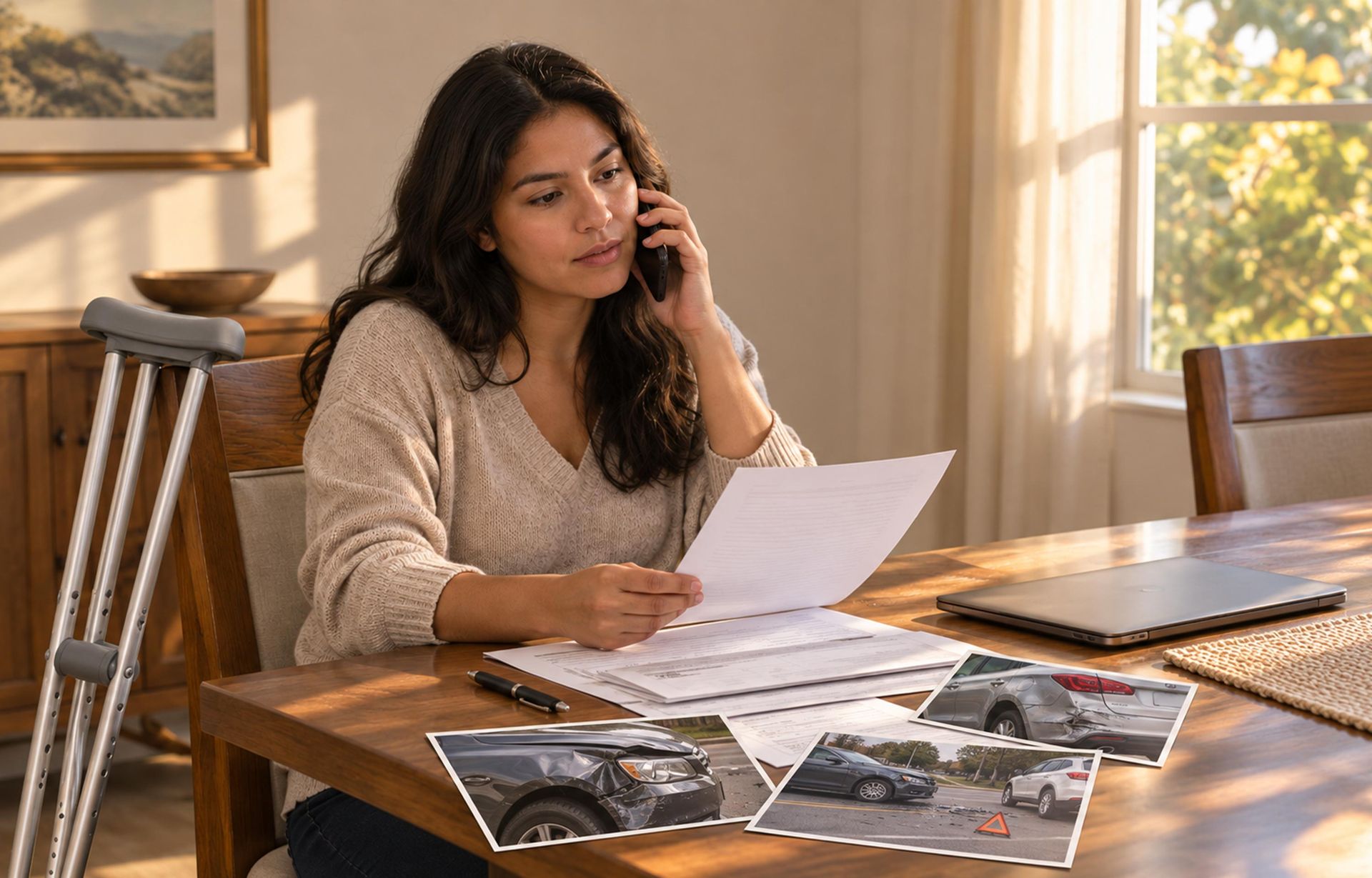
You should promptly notify your own insurance company as required by your policy. Do not delay necessary reporting while deciding whether to hire an attorney. However, consider seeking legal advice before providing an extensive recorded statement to the other driver's insurer, signing a broad medical authorization, or accepting a settlement release.
Insurance adjusters investigate accidents, evaluate evidence, review coverage, and determine how their companies will respond to claims. Their assessments may differ from your understanding of the collision or the extent of your injuries. An adjuster may request additional documentation or question whether particular medical treatment resulted from the accident.
Always provide truthful and accurate information in insurance communications. Avoid guessing about facts you do not remember, speculating about responsibility, or making definitive statements about the long-term effects of an injury before those effects have been medically evaluated. If you are uncertain about a fact, explain that uncertainty rather than providing an unsupported answer.
An attorney can explain your obligations, review requested documents, and help you understand whether an insurance dispute concerns responsibility, coverage, or the amount of compensation being sought. Legal assistance may be particularly useful when an insurer disputes liability, requests unusually broad information, or asks you to resolve an injury claim before your medical outlook is clear.
An insurance adjuster may contact you shortly after the crash to ask questions, request documents, discuss repairs, or evaluate a settlement. Although adjusters have legitimate responsibilities in investigating claims, an adjuster employed by another driver's insurance company does not represent your personal legal interests.
Answer truthfully, but avoid guessing about fault, medical diagnoses, recovery time, or the total value of your losses. Before giving the other driver’s insurer a recorded statement or signing a broad authorization for medical records, ask what is being requested, why it is needed, and whether you are required to provide it. Consider legal advice if you have significant injuries, liability is disputed, or you are unsure about what you are being asked to sign.
Your own insurance policy may require you to cooperate with your insurer’s investigation. Review your policy and respond to legitimate requests, since your obligations to your insurer may differ from those involving the other driver’s insurance company.
Use caution when an insurance company offers a quick settlement. An early payment may seem helpful when medical expenses and vehicle repairs are accumulating, but an injury may require additional treatment or create financial consequences that are not immediately apparent.
Before accepting payment, clarify whether it resolves vehicle damage, an injury claim, or both. Read any release carefully: it may prevent you from pursuing additional compensation for claims covered by the agreement. Consider whether future treatment, lost income, and other reasonably anticipated expenses have been adequately evaluated before settling.
Frequently Asked Questions About What to Do Immediately After a Car Accident
Should I hire a car accident lawyer immediately after an accident?
Consider contacting a lawyer promptly after addressing immediate medical and safety needs if the accident caused injuries, substantial financial losses, disputed responsibility, or complicated insurance issues. Early legal advice can help preserve evidence and clarify your options. A straightforward property-damage-only accident with no injuries may not require representation.
Is it too late to hire a lawyer if the accident happened several months ago?
Not necessarily. You may still be able to retain an attorney and pursue a claim if the applicable legal deadlines have not expired. Texas generally provides a two-year limitations period for ordinary car accident personal injury lawsuits, subject to exceptions and special requirements. However, evidence may become harder to obtain as time passes, so it is advisable to seek legal guidance promptly.
Should I hire a lawyer if the insurance company has already offered a settlement?
Consider consulting a lawyer before accepting a final injury settlement, particularly if you are still receiving medical treatment, may require future care, have lost income, or do not fully understand the release. An attorney can review the offer and explain whether important issues remain unresolved.
Do I need a lawyer if the accident was partly my fault?
You may benefit from legal advice when responsibility is shared or disputed. Under Texas modified comparative responsibility rules, a claimant who is 50% or less responsible may generally recover reduced damages, while someone found more than 50% responsible is generally barred from recovery in claims governed by those rules.
Should I hire a lawyer for a minor car accident?
Not necessarily. If the collision caused no injuries, responsibility is undisputed, and the insurer satisfactorily resolves a straightforward property-damage claim, handling the matter yourself may be reasonable. Legal advice becomes more important if injuries develop, fault is disputed, or significant financial losses arise.
Can I hire a lawyer after my insurance claim has been denied?
Yes. An insurance denial does not automatically prevent you from obtaining legal representation or pursuing compensation. An attorney can review the insurer's explanation, assess supporting evidence, identify coverage issues, and discuss available options. You should still act before applicable legal deadlines expire.
Do I need to finish medical treatment before contacting a lawyer?
No. You can consult an attorney while medical treatment is ongoing. A lawyer can help evaluate available information and identify additional documentation that may be needed. However, the extent of future treatment and recovery may need to become clearer before a final injury settlement can be properly evaluated.
What Should You Do if the Other Driver Leaves the Scene?
If another driver leaves the accident scene without stopping or exchanging information, do not chase the vehicle or attempt to confront the driver. Focus on your safety, check for injuries, and notify law enforcement. Texas law requires drivers involved in qualifying collisions to stop, provide identifying information, and fulfill other legal responsibilities. Leaving the scene without meeting these obligations may result in criminal penalties, depending on the circumstances.
If you can safely observe the departing vehicle, record its license plate number, make, model, color, direction of travel, and any distinctive features. Even a partial license plate number may help investigators identify the driver. Provide this information to responding officers, along with photographs, witness contact information, and any available dashcam or surveillance footage. Nearby businesses or traffic cameras may have recorded the collision, so identifying possible video sources promptly can be important.
Notify your insurance company that the accident involved a hit-and-run driver. Ask whether uninsured motorist coverage or other provisions of your policy may apply. Coverage depends on the policy terms, the circumstances of the collision, and applicable Texas law. Keep the police report number, insurance correspondence, and other supporting records organized because identifying the responsible driver may take time or may not be possible.
Should You Move Your Car After a Texas Accident?
You should move your vehicle out of traffic when it can be operated safely and moving it is appropriate under the circumstances. Leaving a drivable vehicle in an active traffic lane can increase the risk of a secondary collision, particularly on busy highways and intersections. However, you should never attempt to drive a vehicle with damage that makes continued operation unsafe or move it in a way that creates additional danger.
Texas Transportation Code § 550.022 specifically requires drivers involved in certain property-damage collisions on metropolitan-area freeways to move their vehicles as soon as possible when every vehicle involved can be normally and safely driven. Appropriate locations include designated collision investigation sites, frontage roads, suitable cross streets, or other safe areas where drivers can exchange information without unnecessarily obstructing freeway traffic. Under the statute, a vehicle is normally and safely drivable when it does not require towing and can operate under its own power without causing additional damage or hazards.
Moving your vehicle to a safe location does not eliminate your legal responsibilities after the accident. Drivers must still comply with applicable Texas requirements to stop, exchange information, and provide reasonable assistance to injured people. If someone is seriously injured, a vehicle cannot be driven safely, or the circumstances present an immediate danger, follow emergency personnel's instructions and avoid unnecessary risks. Do not remain in moving traffic simply to photograph the original positions of the vehicles.
What Should You Avoid Doing Immediately After a Car Accident?
After a car accident, avoid actions that could endanger your safety, interfere with medical care, or complicate an insurance claim. Some mistakes occur because drivers are shaken or uncertain about their responsibilities. Others result from making decisions before the full extent of the injuries, vehicle damage, or available evidence is known.
Common mistakes to avoid include:
- Remaining in dangerous traffic: Do not stand in an active roadway or delay moving to safety simply to photograph vehicle damage or collect evidence.
- Leaving without fulfilling legal responsibilities: Even a minor collision may require drivers to stop, exchange information, or comply with other Texas accident-reporting requirements.
- Arguing about or speculating on fault: Avoid confrontations and unsupported statements about another driver's actions. Provide accurate information to law enforcement without guessing about facts you do not know.
- Ignoring injuries or delayed symptoms: Do not assume you are uninjured simply because you feel relatively well immediately after the crash.
- Losing or altering evidence: Preserve original photographs, video recordings, witness information, and other documentation that may help establish what occurred.
- Posting accident details on social media: Public statements, photographs, and comments about an unresolved accident may be misunderstood or taken out of context.
- Signing documents you do not understand: Review insurance releases, settlement agreements, and other documents carefully before agreeing to terms that may affect your rights.
Avoid assuming that an initial insurance settlement offer accounts for every loss associated with the accident. Medical treatment, vehicle repairs, lost income, and other expenses may still be developing. Taking time to understand the available information and your legal options can help prevent decisions that are difficult to reverse.
When Should You Contact a Car Accident Lawyer?
You should consider contacting a car accident lawyer promptly if the collision caused injuries, significant financial losses, disputed liability, or difficulties with an insurance claim. Legal representation is not necessary for every accident. A minor collision involving only property damage, no injuries, and straightforward insurance coverage may be resolved without an attorney. However, when medical treatment, lost income, or uncertainty about responsibility is involved, legal guidance can help you understand your options before making important decisions.
Consulting an attorney may be especially helpful when an accident involves multiple vehicles, commercial trucks, company-owned vehicles, an uninsured driver, serious injuries, or an insurance company that denies liability or disputes the extent of your damages. Accidents involving government vehicles or agencies may also raise additional legal requirements, including notice deadlines that can arise much sooner than the ordinary deadline for filing a lawsuit.
Under Texas Civil Practice and Remedies Code § 16.003, most personal injury lawsuits must be filed within two years after the claim accrues, although exceptions and special circumstances may change the applicable deadline. Waiting too long can also make it more difficult to locate witnesses, obtain surveillance recordings, and preserve other evidence.
An attorney can evaluate the collision, identify relevant evidence, explain potential claims, and help determine whether legal representation is appropriate. An initial consultation does not automatically mean a lawsuit will be filed.
For a more detailed explanation, see our guide, When Should I Hire a Car Accident Lawyer?
How Long Should You Keep Records After a Car Accident?
Keep accident-related records for as long as they may be needed to support an insurance claim, document medical treatment, or protect your legal rights. There is no single document-retention period that applies to every Texas car accident. The appropriate length of time depends on the nature of the collision, whether injuries occurred, the status of insurance claims, and the possibility of future legal proceedings.
Do not discard important records simply because your vehicle has been repaired or an insurance company has made an initial payment. Medical treatment may continue after property damage has been resolved, and some injuries can result in ongoing expenses or limitations. Preserve original photographs, video recordings, police reports, medical documentation, repair estimates, insurance correspondence, and evidence of lost income for as long as these materials may remain relevant.
Texas Civil Practice and Remedies Code § 16.003 generally establishes a two-year limitations period for personal injury lawsuits, but that deadline should not be treated as a universal document-retention rule. Exceptions, claims involving minors, governmental entities, insurance disputes, and other circumstances may affect the applicable deadlines or the length of time records remain important. Some claims require action considerably sooner.
Organize physical and electronic records by date, retain backup copies of important files, and keep original photographs and videos whenever possible. Continue adding medical bills, treatment updates, and insurance communications as they become available. Before deleting records connected to an unresolved claim or potentially significant injury, consider asking your insurance company or an attorney which documents should be preserved and for how long.
When Should I Contact a Car Accident Lawyer?
After addressing immediate safety and medical needs, consider speaking with an attorney if:
- You have significant injuries or need ongoing treatment.
- You cannot work or have lost income.
- The other driver disputes responsibility.
- Multiple vehicles or a commercial vehicle were involved.
- The responsible driver has no insurance or insufficient coverage.
- An insurer denies your claim or disputes your injuries.
- You are asked to accept a settlement before your recovery needs are clear.
- A government vehicle or governmental entity may be involved.
- A family member suffered fatal injuries.
Not every minor collision requires legal representation. A consultation can help clarify your options, applicable deadlines, and whether an attorney’s assistance would be useful.
Insurance reporting requirements and lawsuit deadlines are separate. Do not assume that an ongoing insurance claim means you can postpone reviewing your legal options.
Questions About Your Next Steps?
The best time to consult a car accident lawyer is generally early in the claims process when injuries, disputed responsibility, insurance complications, or substantial financial losses are involved. Prompt advice can help preserve evidence, clarify legal deadlines, and identify issues that may affect the claim. However, straightforward accidents involving only minor property damage may not require professional representation.
The decision to hire an attorney should depend on the facts of the accident and the assistance needed, rather than an assumption that every collision requires legal action. Understanding the potential benefits and costs of representation allows injured people to decide whether they can reasonably handle a claim themselves or would benefit from an attorney's involvement.
For additional information about legal representation following a collision, Gordon & Elias, LLP provides information about its Texas car accident practice and offers consultations to discuss potential claims. See the firm’s car accident lawyer practice page.
This article provides general information about Texas law and is not legal advice. Applicable deadlines, insurance rights, and legal remedies depend on the circumstances of each case.
If you have questions about injuries, insurance communications, or a settlement offer after a Texas car accident, Gordon & Elias, LLP offers free consultations to discuss potential legal options.
Learn more about working with a car accident lawyer or request a free consultation .
This article provides general information about Texas car accidents, not medical or legal advice. Legal rights, insurance coverage, and deadlines depend on the circumstances.
Every state limits the amount of time you have to file a claim.
Don't Delay.
Contact the Attorneys at Gordon & Elias, LLP Today to preserve your right to a recovery.


